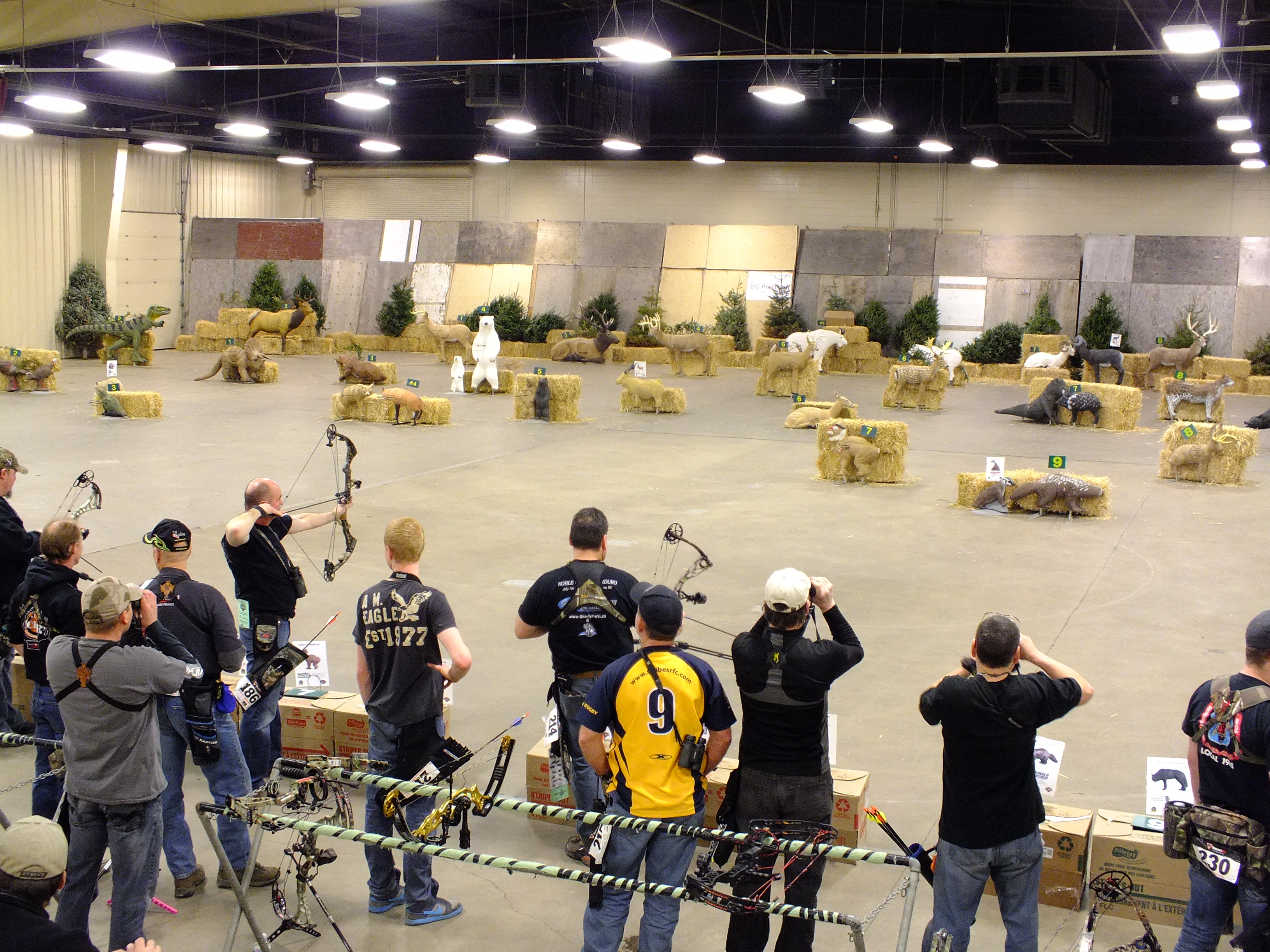
3D archery is a field discipline in which archers move through a woodland or mixed-terrain course and shoot at foam replicas of animals. The targets vary in size from small rabbit-scale models to large elk and bear replicas. Each target is placed at a distance that the archer must estimate without any markers — the visual assessment of distance is as much a part of the discipline as the physical execution of the shot. This format produces a different set of skills from indoor target rounds and attracts a distinct segment of the archery population, particularly compound bow shooters.
How a 3D Course is Laid Out
A standard World Archery 3D round consists of 24 targets arranged around a course. Archers move in small groups — typically three to five per group — from one shooting peg to the next. At each target, a designated shooting area (marked by a stake or painted ground line) establishes where the arrow must be released from. The target is visible from this position but its distance is not indicated. Distances in the WA 3D format range from 5 to 45 metres depending on the target size and class.
In the unmarked distance format, each archer assesses the range independently and adjusts their sight or instinctive aim accordingly before the shot. In the marked distance variant, the distance is displayed on a board near the shooting peg — this format is used in some Czech introductory competitions and in the indoor 3D rounds that some clubs hold during winter months.
Scoring Zones
Each foam animal target carries a scoring zone layout defined by the governing body. Under World Archery rules, the zones on a standard 3D animal target are:
- Kill zone (innermost): 11 points in WA scoring; corresponds approximately to the heart and lung area of the represented animal
- Wound zone: 10 points; the wider body area around the kill zone
- Hit zone: 8 points; anywhere else on the target body
- Miss: 0 points
Some national federations and club competitions use alternative scoring, particularly the ASA (Archery Shooters Association) format popular in North America, which assigns 12 to an innermost ring, 10 to the kill zone, 8 to the body. Czech national 3D championships use the WA scoring standard.
Equipment Divisions
3D competitions at national level in Czech Republic are divided by bow style and sight configuration. The main competitive divisions are:
Compound Unlimited
Compound bow with magnifying scope, stabiliser, and mechanical release aid. The scope's magnification assists range estimation. This division records the highest scores and is the most technically demanding in terms of equipment optimisation.
Compound Limited
Compound bow with a fixed-pin or slider sight (no magnification), mechanical release, stabiliser. Closer to standard compound target setup; widely accessible to club-level compound shooters.
Recurve
Standard WA recurve configuration — recurve bow with a single-pin or multi-pin sight, stabiliser, and finger release. Draw weight and arrow selection at 3D distances require different consideration than at a fixed 70-metre outdoor distance: archers must account for slope angle and ranging error.
Barebow
No sight, no stabiliser beyond the riser's built-in weight. Barebow archers use string walking — adjusting the position of the fingers on the string relative to the nock — as a form of distance compensation. The technique allows a well-practised archer to replicate sight-like precision across the range of distances encountered on a 3D course.
Longbow and Traditional
Longbow and traditional bow divisions attract a smaller field at national level but have a dedicated following at club and regional competitions in Czech Republic. These divisions use instinctive aiming — no mechanical sight reference — and reward accumulated experience with distance reading on varied terrain.
Czech National 3D Calendar
The CFL schedules national 3D rounds from March through October, with regional qualifying events in spring and the national championship typically held in June or early July. Hosting clubs must provide a minimum 24-target course with terrain that prevents line-of-sight from one target lane to another. Czech clubs with established woodland 3D courses include venues in South Moravia, the Vysočina region, and the Bohemian Forest border areas.
Registration for national rounds is managed through the CFL's online portal at archery.cz. Club membership and a valid CFL competition licence are required; guest entries are sometimes available at regional-level events at the discretion of the hosting club.
Archers new to the discipline looking for club options across the country can refer to the club overview article, which notes which Czech clubs operate permanent 3D courses. Equipment selection for 3D archery, particularly the compound sight and release aid choices specific to field distances, is covered in context in the bow guide for beginners.